Martín López-García

Martín López-García

Professor of Mathematical Biology

Department of Applied Mathematics, School of Mathematics
University of Leeds

I develop mathematical and computational models to understand Infection & Immunity across scales (from the cellular, to within-host and population levels). My work combines stochastic modelling, probability theory, and data analysis to address real-world health challenges — from understanding how pathogens spread in hospitals to informing mitigations.
About

I am a Professor of Mathematical Biology in the School of Mathematics at the University of Leeds, and a member of the Mathematical Biology and Medicine Group.

My research focuses on the mathematical modelling of infection across scales — from intracellular and within-host dynamics to population-level epidemic processes. I am particularly interested in developing stochastic models that can capture the inherent randomness in these biological systems. Stochastic techniques can also help to incorporate realistic environmental conditions and human behaviour when modelling infection transmission. Our group has ongoing collaborations with multiple partners including the Defence Science and Technology Laboratory (Dstl), UK Health Security Agency (UKHSA), NHS, and the Department for Transport.

Previously, I held an MRC Skills Development Fellowship (2016–2019), where I developed stochastic models for understanding the emergence and spread of antibiotic-resistant bacteria in healthcare settings. I received my PhD in Mathematics from the Complutense University of Madrid (2013), where I remain affiliated with the Stochastic Modelling Group.

Research Interests

Mathematical Epidemiology Stochastic Modelling Within-host Infection Dynamics Healthcare-associated Infections Mathematical Immunology Airborne Transmission Quantitative Microbial Risk Assessment Multi-scale Modelling

Research projects

Our group's research combines mathematical modelling with experimental and clinical data to address challenges in infection, immunity, and public health. Below are some current and recent projects we are involved in.

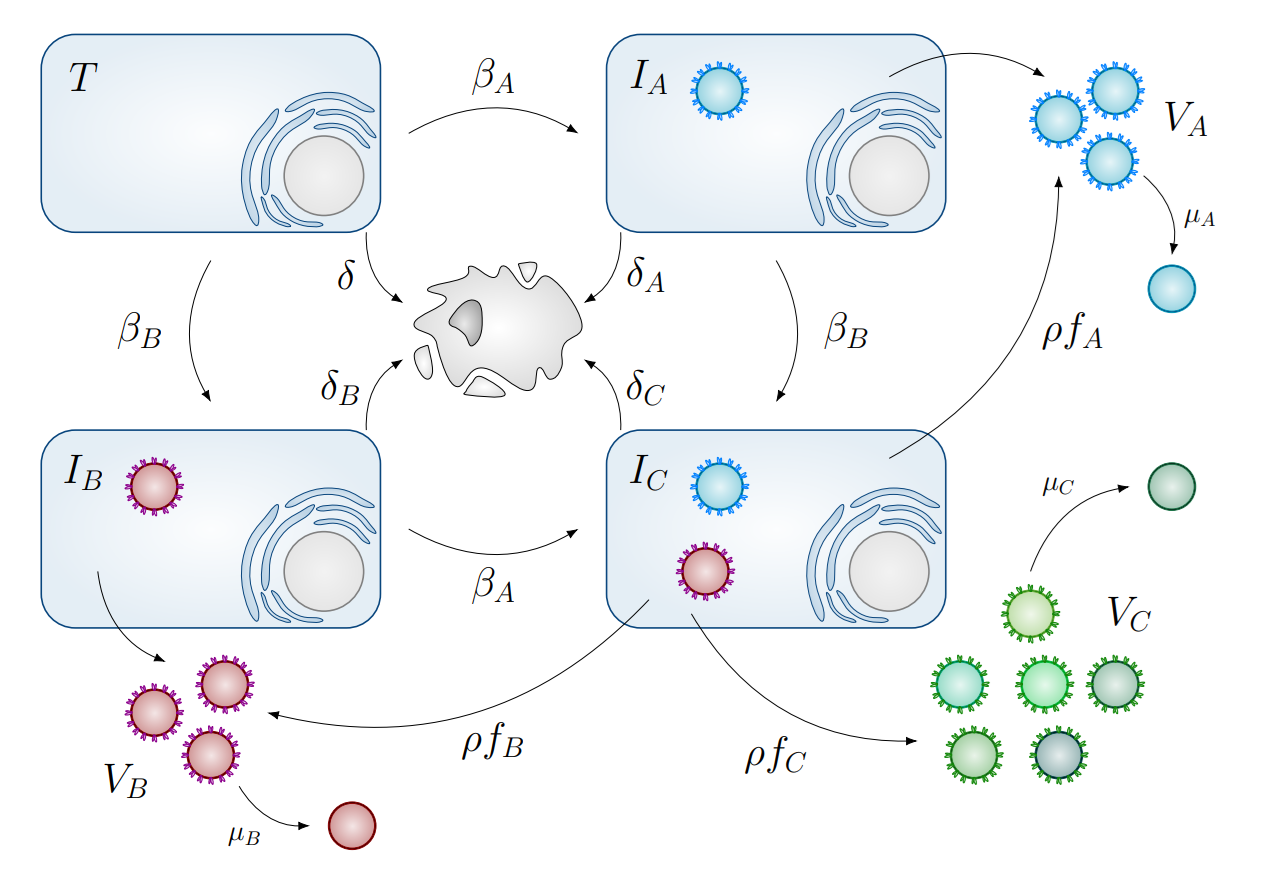
Modelling reassortment at the cellular, clinical, and phylogenetic level in emerging Bunyaviruses

Developing mathematical models of Crimean-Congo Haemorrhagic Fever at multiple scales — from viral reassortment at the cellular level to hospital transmission and phylogenetic analysis. This US-UK collaboration combines modelling with experimental virology and clinical data from endemic regions.

Funded by: BBSRC-NIH EEID.

PI: Prof Grant Lythe (University of Leeds) & Prof Carmen Molina-Paris (Los Alamos National Laboratory).

Partner Institutions: Los Alamos National Laboratory (USA), UK Health Security Agency (UK), Kafkas University (Turkey), Sivas University Hospital (Turkey), Tajik Research Institute of Preventive Medicine (Tajikistan).

EEID Project

EPICVIR: Emerging Porcine Influenza and Coronaviruses

Mathematical modelling of emerging porcine respiratory viruses as part of a European consortium. Developing mathematical models across scales, calibrated to experimental infection data, to understand viral dynamics and inform control strategies.

Funded by: European ICRAD Consortium - BBSRC.

PI: Prof Kristien Van Reeth (Ghent University).

Partners: Pirbright Institute (UK), Utrecht University (Netherlands), Ghent University (Belgium), CIB Madrid (Spain), Pontificia Comillas University (Spain).

Website: EPICVIR

EPICVIR Project

Healthy Buildings Network Leeds

The Healthy Buildings Network is a University of Leeds Horizons Institute Challenge Network bringing together researchers across engineering, mathematics, medicine, and architecture to address the impact of indoor environments on health, particularly in the context of net zero and climate change.

Funded by: University of Leeds Horizons Institute.

Network Co-leads: Prof Martin Lopez-Garcia, Dr Marco-Felipe King, Dr Irene Mussio

Website: Healthy Buildings Network Leeds

Healthy Buildings

Multiscale Modelling of Biothreats

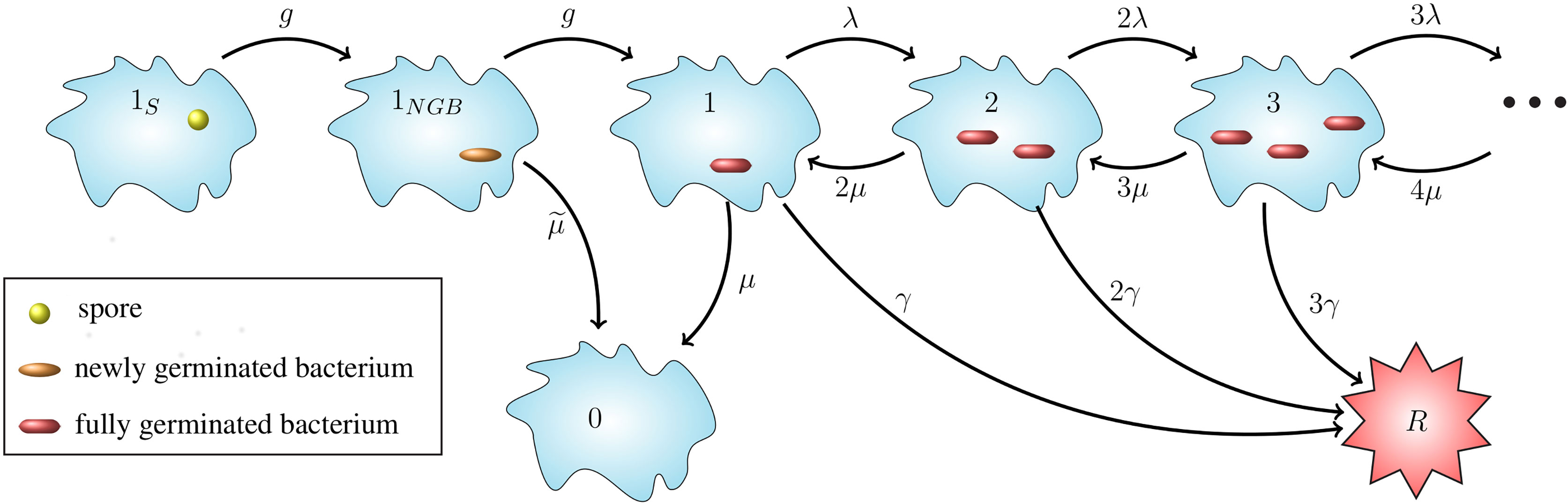
Developing stochastic multi-scale models linking intracellular bacterial dynamics, within-host infection progression, and population-level risk assessment for bacterial pathogens such as Francisella tularensis or Bacillus anthracis.

Funded by: EPSRC CASE Studentships & IAA projects with Dstl.

Partners: Defence Science and Technology Laboratory (Dstl, UK), UK Health Security Agency (UKHSA, UK).

Multiscale modelling

Williams et al. (2021) Frontiers in Immunology.

TRACK: Transport Risk Assessment for COVID Knowledge

Multidisciplinary project designed to address knowledge gaps around COVID-19 transmission on public transport. TRACK has developed a novel risk model that can simulate infection risk through three transmission mechanisms (droplet, aerosol, surface contact) within different transport vehicles and operating scenarios.

Funded by: EPSRC & UK Department for Transport.

PI: Prof Catherine J Noakes (University of Leeds).

Partners: Defence Science and Technology Laboratory (Dstl, UK), UK Health Security Agency (UKHSA, UK), UK Department for Transport, University of Newcastle (UK), Cambridge University (UK), Imperial College London (UK).

Website: TRACK

TRACK

Publications

I have published 70+ peer-reviewed articles in mathematical biology, immunology, epidemiology and quantitative microbial risk assessment. Below are selected recent highlights. For a complete list, see my Google Scholar profile.

View all publications on Google Scholar

Selected Highlights

Publication figure

Mechanistic within-host mathematical model of inhalational anthrax

Whaler B, Lythe G, Gillard JJ, Laws TR, Carruthers J, Finnie T, Molina-París C, López-García M

PLoS Computational Biology, 2025

Mechanistic within-host mathematical model of anthrax infection calibrated against in vitro and in vivo data.

Publication figure

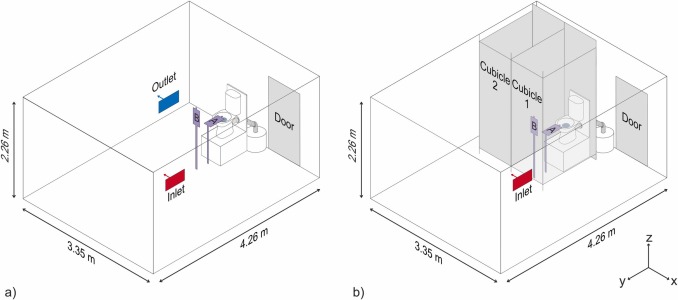
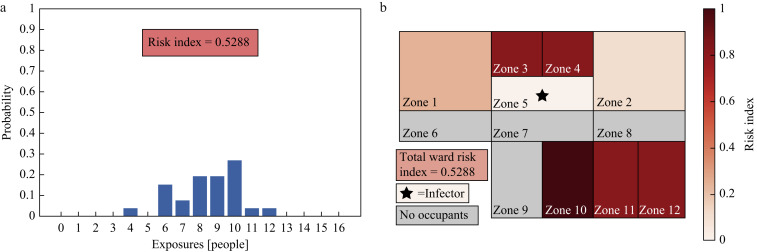
A Quantitative Microbial Risk Assessment (QMRA) framework for exposure from toilet flushing using experimental aerosol concentration measurements

Higham CA, López-García M, Noakes CJ, Tidswell E, Fletcher L

Indoor Environments, 2025

QMRA framework combining experimental aerosol measurements with mathematical modelling to quantify infection risk from toilet flushing.

Publication figure

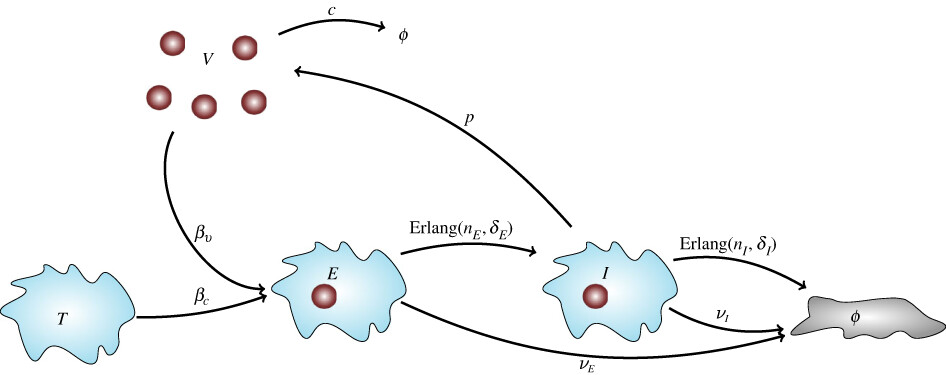
The reproduction number and its probability distribution for stochastic viral dynamics

Williams B, Carruthers J, Gillard JJ, Lythe G, Perelson AS, Ribeiro RM, Molina-París C, López-García M

Journal of the Royal Society Interface, 2024

Novel stochastic methodology to estimate the reproduction number in viral kinetics models, developed in collaboration with Dstl and Los Alamos National Laboratory.

Publication figure

The Wells-Riley model revisited: randomness, heterogeneity and transient behaviours

Edwards AJ, King M-F, Noakes CJ, Peckham D, López-García M

Risk Analysis, 2024

Extending classical airborne transmission models to incorporate parametric uncertainty, stochastic effects and realistic transient behaviours.

Publication figure

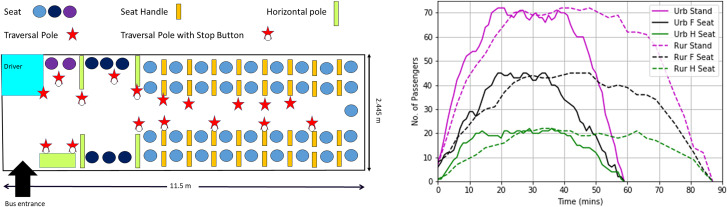
A quantitative microbial risk assessment approach to estimate exposure to SARS-CoV-2 on a bus

Bate AM, Miller D, King M-F, Moseley K-A, Xu J, Hall I, López-García M, Parker ST, Noakes CJ

Journal of Transport and Health, 2024

Part of the TRACK project that provided key evidence to the Department for Transport during the COVID-19 pandemic.

Publication figure

Assessing the effects of transient weather conditions on airborne transmission risk in naturally ventilated hospitals

Edwards AJ, King M-F, López-García M, Peckham D, Noakes CJ

Journal of Hospital Infection, 2024

Novel methodology for assessing how changing weather conditions affect ventilation and infection risk in healthcare settings.

Mathematical Immunology & Epidemiology @ Leeds

Academic Staff

Prof Grant Lythe

Professor of Applied Mathematics

Mathematical Immunology

Dr Francesca Scarabel

Lecturer in Mathematical Biology

Mathematical Epidemiology

Dr Tyler Cassidy

Lecturer in Mathematical Biology

Mathematical Virology

Postdoctoral Researchers

Dr Bevelynn Williams

Postdoctoral Research Fellow

Mathematical modelling of CCHFV, Bacillus anthracis and other biothreats

PhD Students

Anna Hayward

PhD Student (2024–)

Mathematical modelling of Q fever infection dynamics

Marcus Marshall

PhD Student (2022–)

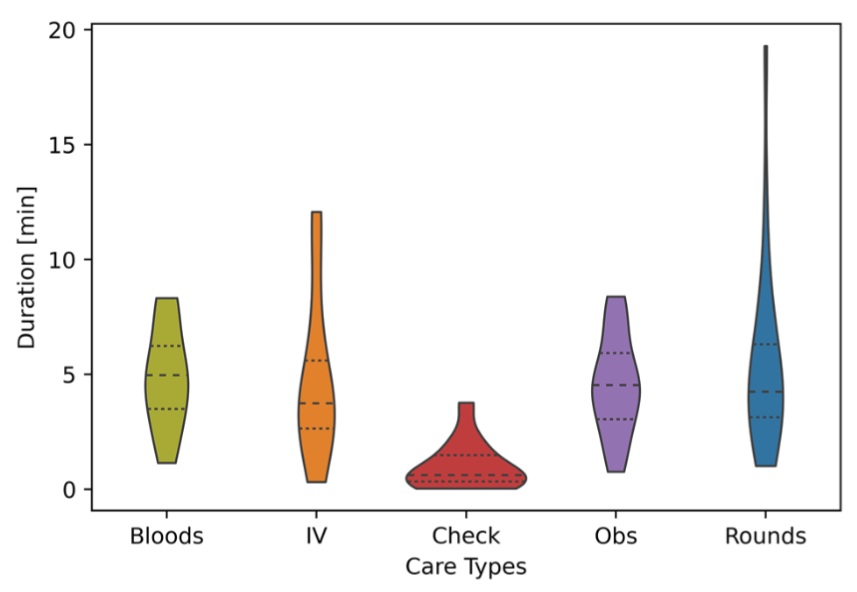
Mathematical modelling of nosocomial infections

Xiaoxuan Qin

PhD Student (2022–)

Quantitative Microbial Risk Assessment techniques for fomite transmission

Danny Blundell

PhD Student (2022–)

Distribution of microbial pathogens in aerosols and the implications for airborne transmission

Adam Aldridge

PhD Student (2020–)

Mathematical modelling of bacterial infections

Amelie Davies

PhD Student (2025–)

Mathematical modelling of tumour growth and oncolytic viruses

Alumni

Former group members and their current positions:

NameRoleYearsCurrent Position
Dr Paula AvelloPDRA2024–2025Lecturer, University of Leeds
Dr Alexander EdwardsPhD2020–2024Lecturer, University of Bristol
Dr Ciara HighamPhD2020–2025PDRA, University of Sheffield
Dr James PatersonPhD2019–2024PDRA, University of Manchester
Dr Giulia BellucciniPhD / PDRA2019–2022Data Analyst, Lloyds Bank, UK
Dr Daniel Luque DuquePhD2018–2022PDRA, University of Oxford
Dr Macauley LockePhD2019–2024PDRA, Los Alamos National Laboratory (USA)
Dr Sijia LiPhD2019–2022Data Analyst, Lloyds Bank, UK
Dr Polly-Anne JeffreyPhD / PDRA2017–2022Senior Cancer Data Analyst, NHS Digital
Dr Flavia FeliciangeliPhD2019–2023Data Scientist (biotech), Germany
Dr Van Thuy TruongPhD2019–2024Data Scientist (pharma), UK
Dr Lea StaPhD2019–2022Data Scientist (pharma), UK
Dr Maria NowickaPhD2012–2018PDRA, University of Oxford
Dr Luis de la HigueraPhD2013–2018Data Scientist (industry)
Dr Hanan DreiwiDaphne Jackson Fellow2019–2023Teaching Assistant, University of Huddersfield

Teaching

I teach modules in applied mathematics, probability, and mathematical biology at undergraduate and postgraduate levels at the University of Leeds. My teaching is research-led, drawing on our group's work in infection modelling and stochastic processes.

Current Teaching

  • MATH3565: Mathematical Biology (Module lead)
  • MATH5566M: Advanced Mathematical Biology (Module lead)
  • MEDM5221M: Cancer Biology and Molecular Oncology (Guest lecturer)

Past Teaching

  • MATH5315M: Applied Statistics and Probability (Module lead, 2016–2020)
  • MATH3001: Project in Mathematics (Supervisor)
  • Stochastic Processes — MSc Statistics, Mozambique & El Salvador
  • MSc in Pandemics, Public Health and COVID-19 (Madrid, Spain)

PhD Supervision

In our group, we have supervised numerous PhD students in the past in collaboration with external partners including Dstl, UKHSA, AstraZeneca, and the NHS. I welcome enquiries from prospective PhD students interested in mathematical biology, stochastic modelling, mathematical epidemiology, immunology and Quantitative Microbial Risk Assessment. See the sections above for current students and ongoing projects. Please get in touch to discuss opportunities.

Contact

Office

Room 10.18d
School of Mathematics Satellite
University of Leeds
Leeds LS2 9JT, UK

Phone

+44 (0)113 343 8951

Interested in collaborating or pursuing a PhD in mathematical biology? I'd be happy to hear from you.